Ruby Ginner (1886–1978), the creator of this style

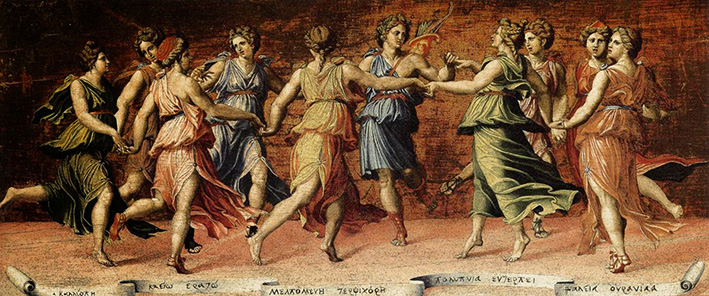
British dancer and teacher Ruby Ginner was born in 1886 in Cannes and grew up in Brighton. A doctor's daughter, she had to flee home to become a dancer. A pioneer of a freer movement in dance, Ruby Ginner's deep and continuous study of Ancient Greece was initiated by her introduction to the great Greek dramas. The necessity to develop her own form of dance movement came through her success when dancing in professional productions from 1904. In this she was later helped by Effie Williams, who added her anatomical expertise, Irene Mawer, with her knowledge of drama and mime, and Nancy Sherwood through her understanding of Greek Art and her outstanding ability to create technical movements. Inspired by the dance poses on ancient Greek vases and painting, which she connected by her own movements, she created the Revived Greek Dance.She was first dancer at the Beecham Opera Company (1910–12), then, in 1913 she founded her own group, Grecian Dancers, with which she gave performances in London. During WW1, she founded the Ruby Ginner School of Dance, which later became the Ginner-Mawer School of Dance and Drama. In 1923 she founded the Association of Teachers of the Revived Greek Dance, later Greek Dance Association. She choreographed numerous dances and wrote two books: The Revived Greek Dance (1933) and Gateway to the Dance (1960).
Aims
This form of movement provides immense enjoyment and an opportunity for creativity. The student also acquires balance and control, relaxation, elevation, clarity of line, grace and ease of movement and the development of musical understanding. The more advanced work allows for a greater study of the visual arts, literature and mythology and develops the various different aspects of this work which includes not only lyrical dance but also athletic, pyrrhic, bacchic, choric, ritual and tragic, all of which can be applied to the world of today. It is undoubtedly one of the best methods of teaching stage movement and dramatic expression in dance form.
|